
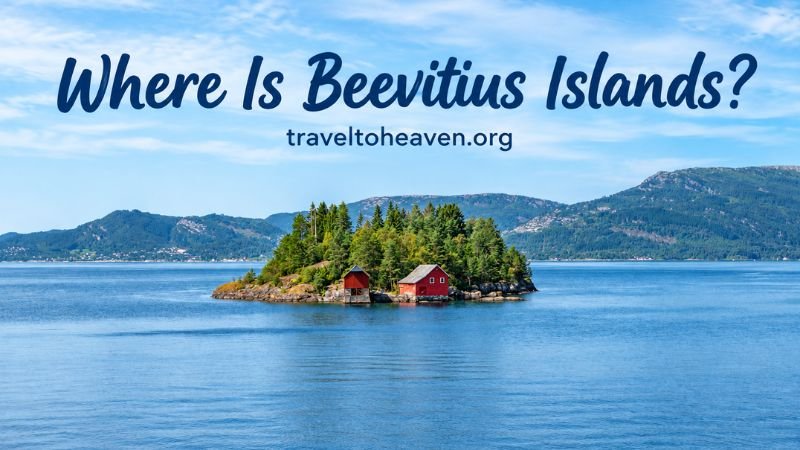
Where is Beevitius Islands? The Truth Behind the Myth
Curious travelers around the world frequently search online asking where is beevitius islands and how they can visit. When exploring mysterious travel legends, one often encounters the concept of a phantom island without physical proof. In recent months, viral travel posts have described this elusive destination as a hidden tropical paradise. However, determining the real facts requires separating viral internet folklore from genuine geographical records. Let us examine the true origins of this name and explore real-world destinations that offer similar breathtaking wonders.
Where is Beevitius Islands Located: Fact Versus Fiction
To answer directly where is beevitius islands, the destination does not physically exist on any official world map. Specifically, neither international maritime organizations nor standard cartographic surveys list any landmass under this name. Furthermore, satellite imagery from global space agencies shows no uncharted archipelago matching these viral descriptions. Therefore, seasoned navigators classify the location as a modern digital fiction rather than a sovereign territory.
For instance, many online slideshows claim the islands lie secluded in the South Pacific or Indian Ocean. In addition, these posts often boast about untouched pink sands, glowing lagoons, and volcanic peaks. As a result, eager vacationers frequently scour flight booking engines in search of non-existent travel packages. Consequently, professional travel advisors emphasize that the destination is an entirely fictional creation born from online storytelling.
The Phenomenon of Modern Phantom Islands
Understanding where is beevitius islands becomes clearer when examining the long history of phantom islands throughout maritime exploration. In past centuries, early sailors often reported seeing distant landforms that were merely optical mirages or low storm clouds. For example, famous legendary lands like Hy-Brasil and Sandy Island appeared on nautical charts for decades. Later on, modern satellite radar decisively disproved their existence.
Moreover, the modern internet era has created a new category of digital phantom islands. Specifically, automated content generators and social media creators invent fictional locations to generate viral curiosity. In particular, catchy names like Beevitius capture public imagination because travelers love discovering secret retreats. Because the name sounds exotic and authentic, people naturally assume it represents an undiscovered paradise. Thus, viral folklore continues an ancient tradition of maritime mythology in our digital space.
Origins of the Viral Name and Online Lore
Several theories attempt to explain how curiosity regarding where is beevitius islands first began circulating across travel forums. First, some researchers believe the name originated as a fictional placeholder in experimental travel writing projects. Second, linguistic analysts suggest the word might be a playful distortion of real destinations like Mauritius or Fiji. In addition, repetitive digital reprints quickly amplified the term across hundreds of travel blogs.
Furthermore, sensationalized captions claiming ‘the world’s most secretive island’ fueled widespread curiosity among casual readers. For example, vibrant concept artwork and generated landscape graphics accompanied many of these viral stories. In particular, images depicting glowing shoreline caves and towering crystal arches made the tale seem remarkably vivid. Consequently, thousands of curious readers began searching for authentic coordinates and travel itineraries.
How Online Myths Compare to Historical Legends
Modern viral locations share striking similarities with ancient geographic folklore. For instance, tales of Atlantis, El Dorado, and Shangri-La captivated explorers for countless generations. In addition, historical cartographers often included speculative islands to fill empty oceanic spaces on hand-drawn parchment maps. Therefore, the human desire for hidden paradises has always influenced how we perceive distant horizons.
Furthermore, modern digital algorithms amplify these stories much faster than historic word-of-mouth legends. Because eye-catching travel imagery spreads across social networks in seconds, fictional destinations quickly gain widespread recognition. However, modern scientific navigation and real-time satellite tracking allow us to verify facts almost immediately. Consequently, curious travelers can appreciate the creative storytelling while remaining grounded in real geography.
Real Tropical Destinations with Similar Magical Features
Even though where is beevitius islands leads to a fictional destination, our planet boasts real islands with surreal beauty. If you crave glowing waters and dramatic volcanic landscapes, several accessible destinations deliver extraordinary memories. Specifically, these authentic travel spots match every fantastical description found in the online legends.
For instance, Vaadhoo Island in the Maldives is world-famous for its natural Sea of Stars. In addition, microscopic marine organisms emit brilliant blue light along the beaches during night hours. Furthermore, Mosquito Bay in Vieques, Puerto Rico, holds the record for the brightest bioluminescent bay on Earth. Therefore, travelers who dream of glowing tropical waters can experience this authentic phenomenon in person.
Meanwhile, the Cook Islands in the South Pacific feature some of the clearest turquoise lagoons on Earth. Specifically, the island of Aitutaki offers blinding white sandbars and pristine coral barrier reefs. In addition, travelers can snorkel among giant clams and sea turtles in calm, shallow waters. Consequently, Aitutaki provides the exact peaceful solitude that readers imagined when searching for remote island escapes.
Volcanic Caves and Dramatic Coastal Wonders
Many viral descriptions also highlight towering sea arches and underground volcanic caverns. For example, the Azores archipelago in Portugal features ancient lava tubes, steaming crater lakes, and dramatic coastal cliffs. In particular, the island of Sao Miguel allows visitors to swim in natural geothermal ocean pools. Therefore, outdoor adventurers find endless geological wonders across these Atlantic islands.
Similarly, Lord Howe Island in Australia limits visitors to preserve its rare wildlife and pristine marine ecosystems. In addition, dramatic volcanic peaks like Mount Gower rise abruptly from crystal-clear coral lagoons. Because visitor numbers remain strictly capped, guests enjoy virtually private beaches and secluded forest trails. Ultimately, Lord Howe Island delivers an exclusive tropical atmosphere that surpasses fictional stories.
How to Verify Unusual Travel Destinations
Before planning expensive vacations based on social media trends, smart travelers take a few simple steps. First, check official government tourism websites or recognized national tourist boards for listed travel requirements. Second, search reputable aviation booking databases to confirm that commercial flights serve local airports. In addition, consulting official embassy travel advisories provides accurate safety and geographical information.
Furthermore, cross-referencing locations on standard satellite mapping platforms quickly reveals physical geography. For example, legitimate islands will show roads, settlements, protected natural reserves, and verified marine coordinates. In particular, if a destination lacks flight routes, hotel registries, or postal codes, it is a fictional creation. Therefore, doing brief preliminary research prevents costly booking misunderstandings and ensures smooth vacation planning.
The Enduring Appeal of Unexplored Places
The intense fascination surrounding where is beevitius islands reveals something profound about human wanderlust. In our hyper-connected world where nearly every mountain peak is photographed, travelers yearn for authentic mysteries. Specifically, the dream of stumbling upon an undiscovered paradise continues to inspire explorers of every generation. While this particular archipelago exists only in imagination, the excitement of discovery remains completely real.
In fact, thousands of genuine remote islands across our oceans remain quiet, pristine, and welcoming to respectful travelers. For instance, you can explore the dramatic fjords of Norway or the warm lagoons of French Polynesia. In addition, the rugged cliffs of Scotland offer dramatic seaside solitude for adventurous explorers. Furthermore, planning visits to verified hidden gems ensures rewarding, safe, and unforgettable global journeys. Take time to research thoroughly, pack with care, and embrace the magnificent real-world destinations that grace our planet.
Visit traveltoheaven for more details.